
Formatting your book can be one of the more stressful tasks to take on as a self-published author. Luckily, I’ve hunted down a few tools and websites to make the process a little less painful. Remember, tutorials and forums are a self-taught author’s best friend.
Adobe InDesign
InDesign is praised for its massive array of tools—perhaps too many tools for some. With a monthly subscription cost, professional designer functions, and a relatively high learning curve, this might not be the best option for beginners.
This program is suited for projects with heavy graphics—illustrations, comic book panels, graphs, diagrams, etc.
Pros of Adobe InDesign:
- Professional and reliable
- Precise control
- Interactive and collaborative features
- Templates and resources
Cons of Adobe InDesign:
- Cost
- Steep learning curve
- Resource intensive
- File compatibility issues
- File size
Price:
- $22.99/month (Windows & iOS)
- Hot tip: Pretend you're canceling your Adobe membership at least once a year—they'll give you a pretty good discount.
Best for:
Career authors who are willing to invest more time and money, or authors who already have experience with Adobe products.
Affinity Publisher 2
Affinity Publisher is comparable to Adobe InDesign. Though it’s easier to use, it’s still considered at the higher end of the learning curve.
Most writers don't need most of InDesign's tools and features, so Affinity is a simpler, more affordable option.
Pros of Affinity Publisher:
- Cost-effective; one-time payment
- User-friendly
- Performance
- Flexible file handling
- Advanced Typography
Cons of Affinity Publisher:
- Fewer third-party resources
- High learning curve
- No cloud-based collaboration
- Lacking in advanced interactive features
Price:
- $69.99 (iOS & Windows)
- $164.99 (universal payment for a bundle of design tools)
- $18.49 (iPad)
Best for:
Authors who are willing to invest money and learn a somewhat non-intuitive software, but who prefer a onetime payment to Adobe's subscription model.
Vellum
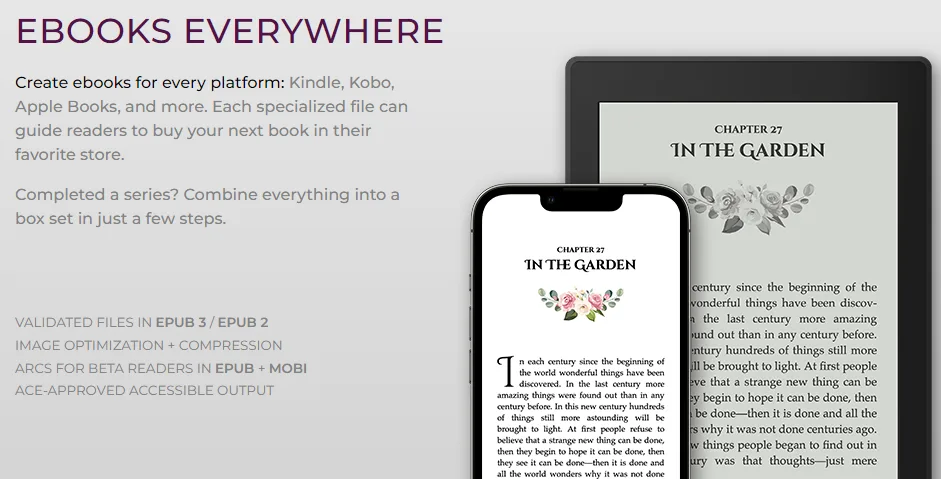
Vellum is specifically designed for novel formatting. Authors who use Mac sing its praises all over the internet. It’s easy to use and you pay only once for unlimited book formatting. Though it’s mainly for Ebooks, it gives you a print format for physical copies. I may consider a Mac just for this.
Pros
- Easy to use
- High-quality formatting
- Ease of export
- No coding required
- Onetime purchase
Cons
- Mac only
- Limited in design customization
- No built-in ISBN management
- File size limitations
- No collaboration
Price:
- $199 for ebook only
- $249 for ebook and paperback
Best for:
Mac-using authors who prefer a simple solution with minimal effort and don't mind investing some money upfront.
Reedsy Book Editor
Reedsy is an easy and inexpensive way to work on your novel on a budget. If you are used to working with Microsoft Word or Google Docs, Reedsy will be breezy.
Reedsy has other services, like connecting with editors to make sure your book is as clean as possible before formatting. It also has a kindle-ready format style.
Pros
- User-friendly interface
- Free to use
- Real-time previews
- Automatic formatting
- Cloud based
- ebook and paperback
Cons
- Limited customization
- Internet dependency
- Medium learning curve
- File size and complexity limitiations
- Export limitations
Price:
Free
Best for:
New authors who are testing the waters of self-publishing and aren't ready for a big investment of either time or money.
Sigil
Sigil is an interesting open-source software. The learning curve is quite steep, as you should learn some HTML coding to use this correctly. However, the ability to learn it is quite accessible.
Pros
- Free and open source
- Multiple view modes
- Metadata management
- No internet required
- Multiple language support
- Validation tools
Cons
- Steep learning curve
- Limited design features
- Less polished user interface
- Complex formatting tasks
- Limited support
- No built-in ISBN management
- ebook only
Price:
Free
Best for:
Tech types and commies who can appreciate an open-source platform.
Amazon’s Kindle Create
If you want a simple way to format your book, Kindle Create is kind of that, theoretically.
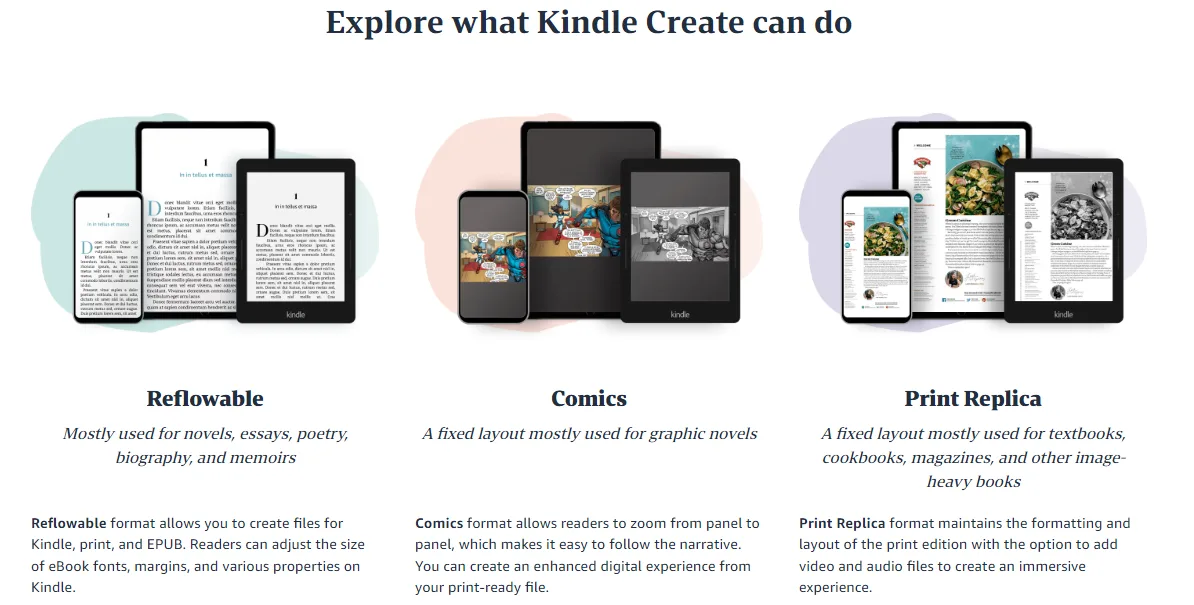
The main purpose of Kindle Create is that you can create KPFs, which are Amazon's preferred file format. (I mean, the ACTUAL main purpose is to provide every possible service as cheaply as can be achieved to shove competitors out of the market, because, yanno, Amazon.)
KPFs are "preferred" for KDP but completely optional, and Kindle Create's interface is something of a nightmare with incredibly limited tools. But it's free, so you might as well check it out.
Pros:
- Kindle-optimized
- Free
- Automatic formatting
- Preview features
- Integration with KDP
- ebook and paperback
Cons:
- Limited customization
- Kindle-centric
- Lack of advanced features
- Limited support for other formats
- No collaboration tools
- Basic print formatting features
- Nightmare interface
Price:
Free
Best for:
Authors who are perhaps bored and want to try out formatting programs for shiggles. Learn more about Kindle Create and its sins here.
Atticus
Atticus creates professional looking novel interiors. It’s noted to be easy to use, and even easier if you prepare your files for upload.
As a newer software, there are some minor glitches, but the team at Atticus seems responsive to feedback. The site is definitely new-user friendly.
Pros:
- It’s a writing and formatting tool
- User-friendly interface
- Cross-platform compatibility
- Formatting flexibility
- Cloud-based storage
- ebook and paperback
- Windows and Mac compatability
Cons:
- Buggy
- Medium learning curve
- Limited advanced features
- Small community and support
Price:
$147
Best for:
Self-published authors. It's a pretty solid program.
Despite how overwhelming the process of formatting may seem, you only need to learn it once. Once you know how to do it, you're in the book production business.